Wildfire Mitigation Tree Services for Safer Homes and Landscapes
Wildfire risk is often discussed in terms of weather, drought, and topography, but on the ground, around actual homes, the conversation gets much more practical. The arrangement of trees, the condition of limbs, the density of understory growth, the distance between crowns, and the placement of wood debris can all influence how a fire behaves when it reaches a property. A house does not have to sit deep in a forest to face that risk. Many suburban and semi-rural neighborhoods have enough vegetation to carry flame, ember cast, and radiant heat from one area to another.
That is where wildfire mitigation tree services earn their value. This work is not simply about cutting trees down. In many cases, the better outcome is selective pruning, crown shaping, structural support, fuel reduction, or the removal of one failing specimen to preserve five healthy ones nearby. A well-planned landscape can remain attractive, shaded, and ecologically useful while being far less likely to intensify a fire event.
Homeowners sometimes assume that mitigation means stripping a property bare. Experienced arborists know better. The goal is to reduce ladder fuels, interrupt fire pathways, improve tree health, and create safer spacing, all while respecting the site. A good plan looks balanced when finished. It does not feel scalped or over-cleared. It feels intentional.
What wildfire mitigation looks like in real landscapes
There is a big difference between a brochure definition of mitigation and what crews see in the field. On one property, the primary hazard may be a line of junipers planted tight against a wood-sided home. On another, it may be mature pines with low dead limbs above a dry ornamental grass bed. In older neighborhoods, I often see dense mixed plantings that were attractive when installed twenty years ago but now function like a continuous fuel bed.
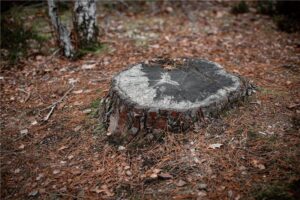
Wildfire Mitigation Tree Services address those specific conditions. The work may include thinning crowded trees so crowns no longer overlap, removing deadwood that can ignite quickly, increasing clearance over roofs and driveways, and treating stumps or woody debris that hold heat and complicate fire suppression access. It can also include evaluating whether a leaning, drought-stressed, or beetle-damaged tree has become a hazard under high wind and fire conditions.
This is why a one-size-fits-all estimate rarely tells the whole story. Two homes on the same street can require very different approaches based on slope, species mix, irrigation, prevailing wind exposure, and maintenance history. A shaded lot with irrigated hardwoods may need a light touch. A dry hillside lot with resinous evergreens close to structures may need much more aggressive intervention.
Trees can either slow a fire or feed it
Healthy, properly spaced trees can play a useful role in a defensible landscape. Deciduous species with higher moisture content, cleaner trunks, and good separation from structures often behave differently than dense, oily conifers packed together with brush beneath them. The issue is not just whether trees exist. It is how they are arranged and maintained.
Fire moves in several ways. Surface fire creeps through grasses, needles, bark mulch, and leaf litter. Ladder fuels, such as shrubs and low limbs, allow those flames to climb. Once fire reaches the canopy, the intensity and spread can increase dramatically. Embers then become a separate problem, landing in roof valleys, vents, gutters, fences, or dry planting beds. That chain reaction is why mitigation work focuses so much on vertical and horizontal spacing.
Tree Pruning & Crown Shaping are central to that effort. Raising lower limbs can reduce the chance of surface fire climbing into the canopy. Thinning selected interior branches can improve air flow and reduce fuel concentration, though it must be done carefully. Over-thinning can stress a tree, increase sunscald risk, and create weak regrowth. Good pruning for wildfire safety is measured and species-aware. It is not random limbing up.
I have seen homeowners remove every low branch from a mature pine because they were told more clearance is always better. A year later, the tree showed stress, the crown was unbalanced, Stump Removal & Grinding and the property had lost much of its shade with only a marginal improvement in fire safety. Better outcomes usually come from a coordinated plan that considers tree biology and fire behavior together.
Why assessment comes before cutting
The first serious step on any wildfire-prone property should be a trained evaluation. Certified Arborist Consultation matters because wildfire mitigation is full of trade-offs. Remove too little, and the fuel problem remains. Remove too much, and the site can become hotter, drier, and more erosion-prone. Trees adapted to a stand environment can react badly if neighboring cover disappears overnight.
A proper site walk should identify species, measure distances to structures, note slope and prevailing wind channels, inspect for disease or insect pressure, and separate aesthetic preferences from actual risk factors. Homeowners are often surprised by what does and does not matter. A dramatic-looking tree with a twisted trunk may be stable and low risk, while a perfectly upright specimen with internal decay and heavy deadwood may be the more urgent concern.
Dangerous Tree Assessment and Removal becomes especially important after drought, storms, or pest outbreaks. Fire-damaged trees from prior incidents can remain standing for months or years before failing. Root systems may be compromised. Trunks may contain hidden cavities. Heavy limbs over roofs, propane tanks, or access roads should not be left to chance.
Here are five common warning signs that deserve professional review:
- Dead or hanging limbs in the upper crown, especially above structures or driveways
- Visible trunk cracks, cavities, or fungal growth near the base
- Trees leaning recently, or showing heaving soil around the root plate
- Dense lower branches and shrubs forming a ladder fuel path under the canopy
- Beetle activity, significant dieback, or widespread browning after drought
A warning sign does not automatically mean a tree must come down. It does mean the tree should be assessed by someone qualified to distinguish manageable defects from failure risks.
Tree removal has a place, but it should be selective
Tree Removal Services are often necessary in wildfire mitigation, but selective removal generally beats broad clearing. The best candidates for removal are trees that combine poor health, poor placement, and high fuel contribution. Think of a dead cedar within a few feet of a deck, or a crowded cluster of small conifers bridging fire from the property line to a garage.
The conversation changes when a mature, healthy tree provides shade, wind buffering, and separation from other fuels. Removing that tree without a broader strategy can backfire. Exposed soil dries faster. Remaining plants receive more sun and may produce vigorous, dry growth. Structures lose shade and become more heat-stressed in summer. Mitigation is strongest when removal decisions are tied to a larger fuel management plan.
There is also a practical access issue. In a wildfire emergency, firefighters need room to operate. Narrow drives blocked by low limbs, dead snags near turnarounds, and dense vegetation around hydrants or gates can delay response. Strategic removals can improve defensible space and make the property more navigable during a real incident.
One detail homeowners overlook is disposal. If removal work leaves slash piles, rounds, or stacked limbs next to the house, some of the benefit is lost. Debris management is part of the job, not an afterthought.
The overlooked role of stumps and ground fuels
After a tree is cut, the remaining stump is often treated as a cosmetic issue. In wildfire planning, it can be more than that. Stumps collect dry material, create trip hazards during emergency movement, and in some cases hold heat or smolder after exposure to fire. They can also become a source of pest activity, depending on species and site conditions.
Stump Removal & Grinding helps clean up the fuel picture at ground level. Grinding is often the preferred method where full extraction would disturb roots of nearby trees or damage irrigation and hardscape. Complete removal may be warranted when replanting, grading, or structural work is planned. The right choice depends on site use, soil stability, and future landscape goals.
Ground fuels deserve as much attention as canopy fuels. Needles in gutters, leaf litter under decks, bark mulch against foundations, and woody debris tucked behind sheds can all become ignition points from embers. A property can have beautifully pruned trees and still remain vulnerable because the lower fuel layer was ignored.
Pruning, shaping, and spacing without ruining the landscape
Many property owners hesitate to begin mitigation because they picture an austere, stripped-out yard. That fear is understandable, especially if they have seen poor work. The good news is that Tree Pruning & Crown Shaping, when done well, can improve both safety and Tree service appearance.
Crown shaping for wildfire mitigation is not topiary. It is subtle structural editing. Crews may remove dead, weak, crossing, or downward-growing limbs, then selectively reduce density to create better spacing and reduce fuel continuity. In some cases, lower limbs are raised to a target height based on species, terrain, and nearby surface fuels. In others, the emphasis is on separating crowns rather than lifting them too aggressively.
This is one area where judgment matters more than formulas. A mature oak on level ground does not need the same treatment as a stand of pines on a steep, south-facing slope. Nor should a young ornamental tree near a patio be pruned the same way as a wind-exposed conifer near a detached garage.
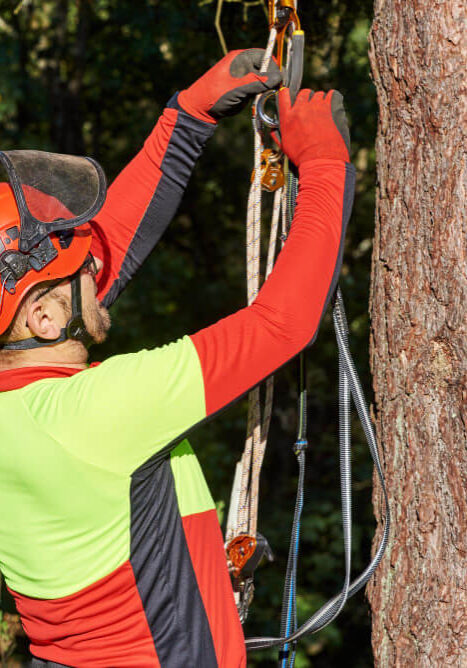
The landscape can remain layered and attractive. It simply needs enough interruption in that layering to deny fire an easy path upward and inward.
When support systems make sense
Tree Cable and Bracing may not be the first service people associate with wildfire mitigation, but it has an important place. Some high-value trees have structural defects that do not justify removal, yet they pose increased failure risk during wind events, storms, or the chaotic conditions that can accompany a wildfire. Supplemental support can reduce movement in weak unions or codominant stems and buy time for a tree that is otherwise worth preserving.
This is not a universal fix. Cabling is not suitable for dead, severely decayed, or fundamentally unstable trees. It does, however, help in cases where the structure is manageable and the tree contributes shade, screening, or property value in a meaningful way. On larger estates and historic properties, preserving mature trees while reducing risk is often a priority, and support systems can be part of that balance.
Support hardware should never be treated as a permanent forget-about-it solution. It requires inspection over time, especially after storms or noticeable canopy changes.
Emergency work after wind, lightning, or near-fire events
Wildfire seasons rarely unfold in isolation. Dry periods, heat stress, monsoon winds, lightning strikes, and winter storm damage can all create urgent tree problems before an actual fire arrives. Emergency Tree Services are often called in when a limb splits over a roof, a tree falls across access, or a partially uprooted specimen threatens to fail.
The emergency side of the business is where delayed maintenance often shows itself. A tree that might have needed moderate pruning six months earlier now requires immediate hazard reduction at higher cost and with fewer options. The same is true after a near miss from wildfire. Trees may look intact from a distance, but heat can damage cambium, roots, and branch unions in ways that become apparent only later.
Post-event inspections matter. Crews should evaluate scorch extent, bark splitting, crown dieback, root zone damage, and secondary pest pressure. Some fire-exposed trees recover surprisingly well with irrigation adjustments, pruning, and monitoring. Others become brittle hazards and need prompt removal before the next wind event.
The value of a phased plan
Not every homeowner can complete all mitigation work in one season, and that is fine. What matters is sequencing the work intelligently. A Certified Arborist Consultation can help prioritize the biggest risk reductions first, then stage the rest over time.
A sensible phased plan often starts with immediate hazards near structures and access routes, then moves outward to stand thinning, pruning, debris reduction, and replanting. Replanting is worth mentioning because removed trees do not have to leave a permanent void. In many regions, lower-flammability, well-spaced, climate-appropriate species can replace poor performers over time.
Here is a practical five-part sequence that works well for many properties:
- Assess hazards near the home, garage, driveway, and utility areas
- Remove dead, declining, or poorly placed trees that create direct risk
- Prune and shape retained trees to reduce ladder fuels and crown continuity
- Grind or remove stumps, then clear and manage remaining woody debris
- Replant selectively with spacing, mature size, and water needs in mind
This kind of planning avoids the common mistake of doing the most visible work first rather than the most important work first.
What homeowners can do between professional visits
Professional crews handle the heavy and technical work, but property owners play a large role in keeping mitigation effective. Conditions change quickly during dry weather. Needles fall, grasses cure, irrigation systems fail, and new growth fills gaps that were safe a year earlier.
Routine observation goes a long way. Walk the property at least a few times during fire season, especially after wind events. Look for fresh deadwood, rubbing branches, accumulated litter under shrubs, and any vegetation touching siding, railings, or fencing. Check that access routes remain clear enough for service vehicles and emergency response. If firewood is stored on site, placement matters, especially during peak season.
The most resilient landscapes are the ones treated as living systems rather than one-time projects. Trees grow. Stresses compound. A mitigation plan should adapt.
Cost, timing, and the danger of bargain work
Wildfire mitigation can be a significant investment, especially on larger or heavily vegetated properties. Costs vary with tree size, access, haul-away requirements, local labor rates, equipment needs, and whether cranes or technical rigging are required. That variability is exactly why cheap bids should be approached carefully.
The lowest price often leaves out debris removal, stump treatment, proper pruning standards, or insurance coverage. I have walked properties where crews removed the obvious dead trees but left cut material in combustible piles, tore bark off retained trees with poor rigging, or topped canopies in the name of fire safety. That kind of work can leave a property less healthy and not meaningfully safer.
Timing also matters. In many regions, late winter through spring is ideal for larger mitigation projects because crews can work before peak fire restrictions and before summer stress intensifies. That said, urgent hazard work should not wait for the perfect calendar window.
Ask how the contractor approaches species selection, pruning limits, debris disposal, and follow-up care. If they cannot explain why one tree should be pruned, another cabled, and another removed, they are probably not doing real mitigation planning.
A safer property still looks like home
The strongest wildfire mitigation work rarely announces itself from the street. You notice cleaner structure, better spacing, healthier crowns, and easier movement through the site. You see a landscape that still has shade, privacy, and character, but far fewer opportunities for fire to climb, run, and trap heat around the home.
That is the standard worth aiming for. Tree Removal Services, Stump Removal & Grinding, Tree Pruning & Crown Shaping, Emergency Tree Services, Certified Arborist Consultation, Dangerous Tree Assessment and Removal, Tree Cable and Bracing, and broader Wildfire Mitigation Tree Services all play different roles in reaching it. The right mix depends on the land in front of you, not on a generic checklist.
When the work is done well, it protects more than a structure. It protects evacuation access, emergency response conditions, long-term tree health, and the everyday livability of the property. Safer landscapes are not empty landscapes. They are managed with purpose, maintained with discipline, and shaped with respect for how fire actually behaves.
Name: Ace Tree Services Ltd.
Address: 4656 Wallace Hill Rd, Kelowna, BC V1W 4C2, Canada
Phone: 250-212-9593
Website: https://acetree.ca/
Email: [email protected]
Hours:
Sunday: Closed
Monday: 7:00 AM–5:00 PM
Tuesday: 7:00 AM–5:00 PM
Wednesday: 7:00 AM–5:00 PM
Thursday: 7:00 AM–5:00 PM
Friday: 7:00 AM–5:00 PM
Saturday: 7:00 AM–5:00 PM
Time zone: Pacific Time
Open-location code / Plus code: RHF8+8G Kelowna, British Columbia, Canada
Map/listing URL: https://www.google.com/maps/search/?api=1&query=Google&query_place_id=ChIJxRVIBx2LfVMRNRSkp6-IC0U
Embed iframe:
Socials:
https://www.facebook.com/p/Ace-Tree-Services-61585901931447/
Ace Tree Services Ltd. provides professional tree care from its Kelowna location on Wallace Hill Road.
The official website lists tree removal, stump removal and grinding, tree pruning and crown shaping, emergency tree services, certified arborist consultation, dangerous tree assessment and removal, tree cabling and bracing, and wildfire mitigation.
Ace Tree Services serves homeowners, businesses, and property owners in Kelowna and throughout the Okanagan Valley.
The company’s official site highlights ISA Certified Arborist support, local Okanagan experience, and fully insured tree service work.
Customers can contact Ace Tree Services for planned tree maintenance, high-risk removals, storm-related tree concerns, pruning, stump grinding, and arborist consultation needs.
The supplied public listing address is 4656 Wallace Hill Rd, Kelowna, BC V1W 4C2, near rural and residential service areas in southeast Kelowna.
For tree services in Kelowna and the Okanagan, call 250-212-9593, email [email protected], or visit https://acetree.ca/
The public map listing uses plus code RHF8+8G Kelowna, British Columbia, Canada and can help customers find Ace Tree Services Ltd. near Wallace Hill Road.
Popular Questions About Ace Tree Services Ltd.
What does Ace Tree Services Ltd. do?
Ace Tree Services Ltd. provides tree removal, stump removal and grinding, tree pruning and crown shaping, emergency tree service, certified arborist consultation, dangerous tree assessment and removal, tree cabling and bracing, and wildfire mitigation.
Where is Ace Tree Services Ltd. located?
Ace Tree Services Ltd. is listed at 4656 Wallace Hill Rd, Kelowna, BC V1W 4C2, Canada.
What phone number should customers call?
Customers can call Ace Tree Services Ltd. at 250-212-9593.
What is the email address for Ace Tree Services Ltd.?
The supplied email address is [email protected].
What are Ace Tree Services Ltd.’s hours?
The supplied listing hours show Monday through Saturday from 7:00 AM to 5:00 PM, with Sunday closed, Pacific Time. The official website lists 7:00 AM to 5:00 PM, Monday through Friday, so customers should confirm Saturday availability before booking.
Does Ace Tree Services Ltd. provide emergency tree service?
Yes. The official website lists emergency tree services, including emergency tree removal, dangerous tree assessment, emergency stabilization, and limb or branch cleanup.
Does Ace Tree Services Ltd. offer arborist consultations?
Yes. The official services page lists certified arborist consultation as one of the company’s Okanagan tree services.
Does Ace Tree Services Ltd. provide stump grinding?
Yes. The official services page lists stump removal and grinding as a service.
What areas does Ace Tree Services Ltd. serve?
The official website states that Ace Tree Services serves Kelowna and the Okanagan Valley.
How do I contact Ace Tree Services Ltd.?
Call 250-212-9593, email [email protected], visit https://acetree.ca/, or use the listed social profile: Facebook.
Landmarks Near Kelowna, BC
Wallace Hill Road: The road listed for Ace Tree Services Ltd. and a practical reference point for the company’s Kelowna location.
East Kelowna: A nearby rural and residential area where tree maintenance, pruning, removals, and wildfire mitigation can be important for property owners.
Myra-Bellevue Provincial Park: A major outdoor landmark southeast of Kelowna and a useful reference for the surrounding hillside and forested areas.
Gallagher’s Canyon: A nearby Kelowna community with residential properties, mature trees, and landscape maintenance needs.
Kettle Valley: A southeast Kelowna neighborhood with homes, parks, and landscaped properties.
Mission Creek Greenway: A well-known natural corridor in Kelowna and a local reference point for tree-lined recreation areas.
Orchard Park Shopping Centre: A major Kelowna retail landmark and citywide reference point.
Downtown Kelowna: A central business and residential district within Ace Tree Services’ broader Kelowna service area.
Okanagan Lake: A major regional landmark running through Kelowna and the surrounding Okanagan Valley.
Mission Creek Regional Park: A recognizable Kelowna park and natural landmark with extensive trees and trails.
Rutland: A large Kelowna community with residential and commercial properties that may need tree service support.
Glenmore: A Kelowna neighborhood with homes, parks, and established trees.
Lower Mission: A residential and lake-adjacent Kelowna area where pruning, tree health, and property safety can matter for homeowners.
Kelowna International Airport: A major transportation landmark north of central Kelowna.
West Kelowna: A nearby Okanagan community across the lake and a practical regional service reference.
For tree removal, stump grinding, pruning, crown shaping, emergency tree service, arborist consultation, dangerous tree assessment, cabling and bracing, or wildfire mitigation near these Kelowna and Okanagan landmarks, contact Ace Tree Services Ltd. at 250-212-9593, email [email protected], or visit https://acetree.ca/