Tree Removal Services for Trees That Cannot Be Retained Safely
There are times when good tree care means preserving a tree for decades, and there are times when the safest, most responsible recommendation is removal. That distinction matters. People often call for Tree Removal Services expecting a quick yes or no, but the real answer usually starts with a more careful question: can this tree be retained safely with reasonable measures, or has it crossed the line where risk reduction is no longer enough?
That line is not always obvious from the ground. A tree can still leaf out, still cast welcome shade, and still be structurally compromised. It can stand in a yard for years with hidden defects, then fail during a wind event or under snow load. It can also look rough, lopsided, or neglected and yet be a candidate for corrective care rather than removal. This is why dangerous-tree decisions should not be reduced to appearance alone, and why a Certified Arborist Consultation has real value when the stakes involve homes, vehicles, walkways, utility areas, or occupied outdoor spaces.
The goal is not to remove more trees than necessary. It is to make sound decisions about trees that cannot be retained safely, based on risk, site conditions, and what mitigation can realistically accomplish.
Why some trees cannot be retained
A tree becomes a removal candidate when the level of risk is no longer acceptable, or when available treatments cannot reduce that risk enough. Tree risk assessment is a systematic process. It is meant to identify, analyze, and evaluate the risk associated with a tree, then recommend measures that bring that risk to a more acceptable level when possible. That last phrase, when possible, is where many difficult conversations begin.
No tree is completely without risk. That is an important point that property owners do not always hear early enough. Mature trees move, shed small limbs, react to weather, and change over time. Arborists do not work from the unrealistic premise that a tree can be made perfectly safe. Instead, they look at whether the risk is tolerable in that setting and whether pruning, structural support, or monitoring can make enough difference without introducing new problems.
Sometimes the answer is yes. A tree with a weakly attached limb over a driveway may respond well to proper pruning. A codominant stem may benefit from Tree Cable and Bracing in the right circumstances. Crown management may reduce end weight and lessen failure potential. In fire-prone settings, FireSmart Tree Services may focus on spacing, fuel reduction, and selective management rather than broad removal.
Other times, the answer is no. A tree may be too compromised, too large for the available targets beneath it, or too structurally unreliable for mitigation to be meaningful. In those cases, Dangerous Tree Assessment and Removal is not an aggressive option. It is the prudent one.
Removal should be the last sound option, not the first suggestion
Experienced arborists rarely approach a mature tree with a one-size-fits-all mindset. It is usually better practice to consider whether less invasive work can address the concern. Tree Pruning & Crown Shaping, when done correctly, can improve structure, remove dead or damaged parts, and reduce the likelihood of certain failures. But pruning has limits. It cannot reverse decay. It cannot rebuild lost root support. It cannot make a fundamentally unstable tree dependable in a high-target area.
That distinction is where poor Tree Pruning & Crown Shaping advice often shows up. Property owners sometimes hear that “trimming it back” will solve everything. In reality, indiscriminate cutting can make a bad situation worse. Industry guidance around pruning emphasizes proper branch removal and reduction cuts, along with techniques such as crown reduction and directional pruning. It also warns against improper practices like topping or leaving stubs. Those shortcuts may create larger wounds, weak regrowth, and future hazards. A tree already on the edge of failure does not become safer through rough cutting.
When retention is being considered, the arborist has to weigh both the biology of the tree and the use of the site around it. A tree standing in a back corner of a large rural lot presents a different level of concern than an equally compromised tree leaning over a child’s play area, a commercial entrance, or a parking lane. Risk is not just about the defect. It is about the defect plus the likelihood of impact and the consequences if failure occurs.
What a professional assessment is really looking for
A proper evaluation is not a casual glance from a truck window. It is a trained review of the tree and its setting. ISA guidance on risk assessment treats this as a structured process, not guesswork. Arborists are trained in the art and science of tree FireSmart fuel reduction care, and certified professionals maintain that credential through examination, continuing education, and ethical obligations. That matters because dangerous-tree decisions affect both safety and long-term landscape value.
In practice, the assessment often revolves around several connected questions. Is the tree showing signs that suggest structural weakness? Is the defect isolated or extensive? Is there a realistic mitigation measure available? How often is the area beneath or near the tree occupied? What would the consequences be if a significant part failed?
The recommendation may still involve retention. Some trees can be monitored, pruned, or supported. Structural support systems such as Tree Cable and Bracing can play a role in select cases, especially where the issue involves stem attachment or load distribution rather than advanced overall decline. But support systems are not a promise that failure will never happen. They are tools within a broader management plan.
That nuance is important. Homeowners often want certainty, but arboriculture deals more honestly in risk reduction than guarantees. A reputable arborist should be able to explain why a tree can stay, why it should come down, or why a short-term management plan might buy time without pretending the issue has vanished.
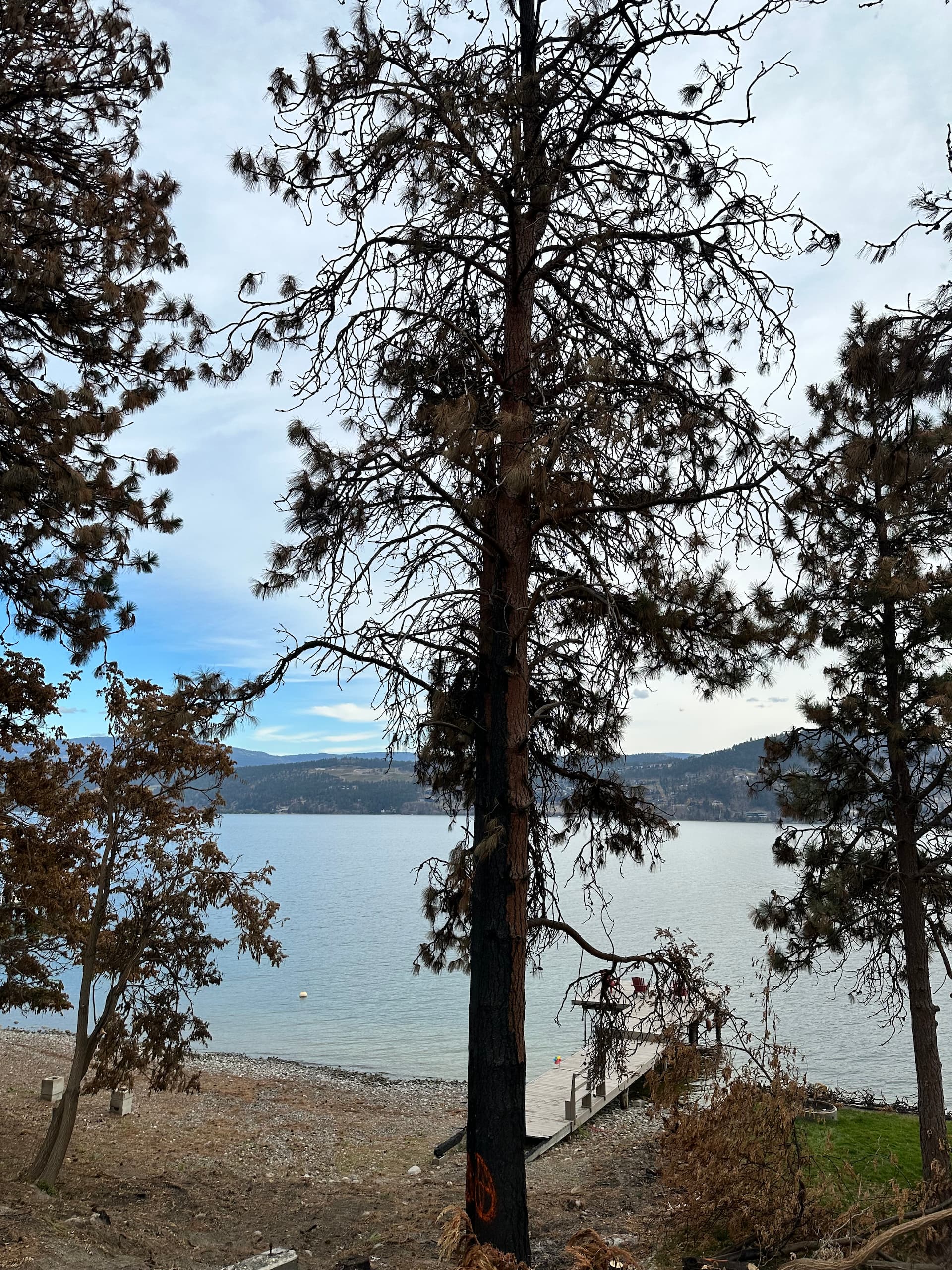
Where Tree Removal Services become the responsible choice
Some removals are straightforward because the risk picture is clear. A tree may have failed partially already, with the remaining structure unstable. It may have sustained storm damage that changed load paths in ways pruning cannot correct. It may be positioned so close to targets that even a moderate likelihood of failure becomes unacceptable.
This is especially true after severe weather. Emergency Tree Services are often called when branches split, tops fail, or root plates shift. In these moments, people naturally focus on immediate cleanup, but emergency response also involves deciding whether the remaining tree can be made safe enough to retain. Sometimes a broken leader can be removed and the canopy rebalanced. Sometimes the residual structure is too compromised, and the emergency call turns into a full removal operation.
Large-tree removals are dangerous work, which is precisely why major industry guidance stresses that pruning and removals, especially on large trees, should be handled by trained and properly equipped professionals. This is not a place for casual ladder work or improvised chainsaw use. Controlled lowering of limbs, rigging, and safe work positioning are part of skilled arboricultural operations for a reason. The danger is not limited to the worker in the tree. It extends to nearby buildings, fences, neighboring properties, parked vehicles, and anyone entering the work zone unexpectedly.
There is also a practical reality that property owners sometimes underestimate. The tree that “just needs to come down” may be woven through structures, suspended over a roofline, or confined by access limitations. Removal in an open field and removal in a dense residential lot are entirely different assignments. The complexity often lies less in cutting the tree than in getting every section to the ground without damage.
The role of pruning, support, and monitoring before removal is chosen
Many trees arrive at the removal stage after years of deferred care. That does not mean all delayed maintenance would have saved them, but it does mean some removals might have been postponed or avoided through earlier management. Tree Pruning & Crown Shaping, when performed according to accepted practice, can improve branch spacing, reduce structural stress, and remove damaged or dead wood before defects become more serious. Proper pruning is selective and intentional. It is not the same as cutting back everything that looks long.
Likewise, Tree Cable and Bracing can sometimes help preserve a tree that has value and a manageable defect. Structural support is not cosmetic. It is a targeted response to a specific weakness. It is also not universal. Not every crack, union problem, or heavy lateral limb is a good candidate. The judgment lies in whether the support meaningfully reduces risk and whether the rest of the tree remains suitable for retention.
Monitoring can be part of that equation too. A tree with a known defect in a lower-occupancy area might be inspected periodically rather than removed immediately. That approach depends on honest communication. Monitoring is not benign neglect. It requires the owner to understand that conditions can change, especially after storms or seasonal loading.
When those options no longer provide a reasonable path, removal shifts from unfortunate to necessary. That is the point at which a tree has effectively exhausted the safer retention strategies available to it.
Why emergency removals are different from planned removals
Planned removals allow for methodical setup, crew coordination, traffic or site control if needed, and a cleaner decision-making process. Emergency Tree Services rarely have that luxury. The call may come after high winds, wet snow, or a branch failure that has already affected access or property use. The tree may be hung up in another canopy, resting on a structure, or partially broken but still loaded with tension.
These are the cases where patience and training matter most. The fastest-looking solution is not always the safest. In emergency situations, stabilizing the site and removing the most immediate hazards often comes first. The arborist then determines whether the remaining tree can be retained with pruning or whether the safest course is Dangerous Tree Assessment and Removal as a complete package.
Property owners sometimes want immediate certainty in these moments, but emergency tree work often proceeds in stages. First, secure the hazard. Next, assess the remaining structure. Then decide whether recovery work makes sense. That progression is practical, and it reduces the chance of compounding the damage.
What happens after the tree is down
Removal does not end when the trunk hits the ground. The stump becomes the next decision point, especially if the area will be replanted, landscaped, paved around, or returned to regular foot traffic. This is where Stump Removal & Grinding enters the conversation.
Some owners choose to leave a stump for budget or site reasons. Others want it gone because it interferes with grading, mowing, future planting, or the appearance of the property. The right choice depends on how the space will be used afterward. Grinding is often part of closing out the project cleanly, particularly in visible residential landscapes and commercial sites where a leftover stump becomes an obstacle.
The aftermath also raises the question of replacement. If a mature tree had to be removed for safety, many owners want to restore shade or privacy with a new planting plan. That is often the healthiest mindset. A failed tree can be a loss without becoming a permanent void.
Fire-prone properties require a different lens
In some regions, FireSmart Tree Services influence removal decisions in ways that differ from ordinary landscape care. The concern is not only whether a tree might fail structurally, but also how vegetation arrangement affects fire behavior around structures. Selective removal, pruning, and spacing may all have a place in reducing fuel continuity and managing defensible space.
This does not mean every tree near a home should be removed. It means the arborist and property owner should evaluate the role each tree plays in the broader setting. A tree may be retained with modification, or it may be removed because it presents both a structural concern and a fire-related concern. FireSmart planning works best when it is selective rather than reactionary. The objective is risk reduction, not stripping a property bare.
Questions worth asking before approving removal
A careful property owner should feel comfortable pressing for clarity. If the recommendation is removal, the reasoning should be understandable in plain language. If the recommendation is retention, the limits of that decision should also be clear. A useful conversation often includes these points:
- What specific defect or risk factor makes the tree unsafe to retain?
- Can Tree Pruning & Crown Shaping or Tree Cable and Bracing reduce the risk enough?
- Does the site beneath the tree raise the consequences of failure?
- Is this a planned removal, or does it require Emergency Tree Services?
- What is the plan for Stump Removal & Grinding after the tree is removed?
Those questions do more than help with cost decisions. They reveal whether the recommendation is thoughtful, site-specific, and grounded in arboricultural judgment rather than sales pressure.
The value of a Certified Arborist Consultation
There is a reason professional credentials matter in tree care. ISA Certified Arborists are trained, tested, and expected to continue their education. They also operate within a code of ethics. When a tree may need to come down, those standards support a more defensible process. The arborist is not simply choosing between keeping and cutting. They are evaluating risk, treatment options, site use, and the limits of intervention.
For owners, that often brings a different quality of explanation. Instead of vague warnings, they get a clearer account of what can and cannot be managed. Instead of hearing that a tree is “dangerous” in a generic sense, they hear why the risk matters at that property and what alternatives were considered.
That is especially useful when the tree has sentimental or practical value. Mature shade trees are not replaced quickly. Screening trees may define privacy for an entire lot. Removing one should feel consequential, because it is. A good consultation respects that while still addressing the central issue, which is public and property safety.
When preserving the tree is no longer the responsible answer
Some clients initially feel that removal represents failure, either of maintenance or of stewardship. In practice, there are cases where removal is the most responsible act of stewardship available. Keeping a tree that cannot be retained safely is not conservation. It is postponement, often at someone else’s risk.
The better way to frame it is this: sound arboriculture tries to keep trees whenever prudent, reduces risk where possible, and removes trees when mitigation is insufficient. That sequence matters. It leaves room for pruning, support systems, monitoring, and FireSmart management, but it does not force retention beyond what safety and professional judgment allow.
When Tree Removal Services are recommended after a proper assessment, the recommendation should come from that disciplined process. Not because the tree is inconvenient, not because it drops leaves, and not because removal is easy to sell. It should come because the tree’s condition, structure, or context makes retention unreasonable, even after considering the tools available to reduce risk.
For property owners, that is the standard worth looking for. For arborists, it is the standard worth defending.
Name: Ace Tree Services Ltd.
Address: 4656 Wallace Hill Road, Kelowna, BC
Phone: 250-212-9593
Website: https://acetree.ca/
Hours:
Monday: 7:00 AM–5:00 PM
Tuesday: 7:00 AM–5:00 PM
Wednesday: 7:00 AM–5:00 PM
Thursday: 7:00 AM–5:00 PM
Friday: 7:00 AM–5:00 PM
Saturday: 7:00 AM–5:00 PM
Sunday: Closed
Emergency tree services: 24/7 emergency service is listed.
Open-location code / Plus code: RHF8+8G Kelowna, British Columbia, Canada
Map/listing URL: https://www.google.com/maps/place/Ace+Tree+Services+Ltd./@49.8232606,-119.4337283,563m/data=!3m1!1e3!4m6!3m5!1s0x537d8b1d074815c5:0x450b88afa7a41435!8m2!3d49.8232606!4d-119.4337283!16s%2Fg%2F11ydkpnh22
Embed iframe:
Socials: https://www.facebook.com/people/Ace-Tree-Services/61585901931447/
https://m.yelp.com/biz/ace-tree-services-kelowna
Ace Tree Services Ltd. provides professional tree service for residential, commercial, and municipal customers in Kelowna and across the Okanagan Valley.
The company’s listed services include tree removal, stump removal and grinding, tree pruning and crown shaping, emergency tree services, certified arborist consultation, dangerous tree assessment, tree cable and bracing, and wildfire mitigation.
Ace Tree Services works with homeowners, businesses, property managers, and public-sector clients that need safe, practical tree care in the Kelowna area.
The official site highlights ISA-certified arborists, insurance, and experience handling both routine and complex tree service situations.
Customers can contact Ace Tree Services for tree care planning, hazard concerns, emergency tree cleanup, pruning needs, stump grinding, or advice about trees near homes, fences, driveways, and landscaping.
Ace Tree Services lists regular work hours from 7:00 AM to 5:00 PM Monday through Friday, with 24/7 emergency tree service available for urgent situations.
For tree service in Kelowna, call 250-212-9593 or visit https://acetree.ca/
The public map listing places Ace Tree Services Ltd. in Kelowna and can help customers find directions to the Wallace Hill Road area.
Popular Questions About Ace Tree Services Ltd.
What services does Ace Tree Services Ltd. provide?
Ace Tree Services Ltd. provides tree removal, stump removal and grinding, tree pruning and crown shaping, emergency tree services, certified arborist consultation, dangerous tree assessment and removal, tree cable and bracing, and wildfire mitigation.
Where is Ace Tree Services Ltd. located?
The official website lists Ace Tree Services Ltd. at 4656 Wallace Hill Road, Kelowna, BC.
What areas does Ace Tree Services Ltd. serve?
The official website describes Ace Tree Services as located in Kelowna and servicing the Okanagan.
What phone number should customers call?
Customers can call Ace Tree Services Ltd. at 250-212-9593.
What are Ace Tree Services Ltd.’s regular hours?
The official website lists work hours as 7:00 AM to 5:00 PM, Monday through Friday. Saturday and Sunday regular hours are not listed and should be confirmed directly.
Does Ace Tree Services Ltd. offer emergency tree service?
Yes. The official website lists 24/7 emergency services for urgent tree situations, including emergency tree removal, dangerous tree assessment, stabilization, and limb or branch cleanup.
Does Ace Tree Services Ltd. have certified arborists?
Yes. The official website states that Ace Tree Services has ISA-certified arborists.
Can Ace Tree Services Ltd. help with wildfire mitigation?
Yes. Wildfire mitigation is listed as one of the company’s tree services.
How do I contact Ace Tree Services Ltd.?
Call 250-212-9593 or visit https://acetree.ca/.
Landmarks Near Kelowna, BC
Wallace Hill Road: A local Kelowna road near the address listed for Ace Tree Services Ltd.
Okanagan Lake: A major Kelowna landmark near residential, commercial, and waterfront properties that may need tree pruning, removal, or hazard assessment.
Downtown Kelowna: A central area with homes, offices, rental properties, restaurants, and commercial sites that may need professional tree care.
Mission / Lower Mission: A well-known Kelowna area with mature landscaping, residential properties, and lake-adjacent homes.
South East Kelowna: A rural and residential area with larger properties, orchards, and tree-care needs that can include pruning, removals, and wildfire mitigation.
Crawford: A residential area near the southeast side of Kelowna where homeowners may need tree trimming, hazard assessment, and stump grinding.
Kettle Valley: A hillside residential neighborhood where tree condition, slope, wind exposure, and defensible-space planning can matter for property owners.
Myra-Bellevue Provincial Park: A major outdoor landmark near southeast Kelowna and a useful point of orientation for nearby properties.
Gallagher’s Canyon: A residential and golf community near southeast Kelowna where tree maintenance and wildfire-conscious vegetation management can be practical concerns.
Orchard Park Shopping Centre: A major central Kelowna retail landmark and reference point for customers traveling across the city.
Highway 97: A major Kelowna corridor connecting neighborhoods, commercial properties, and service routes throughout the region.
Kelowna City Park: A recognizable central landmark near downtown neighborhoods and lakefront properties.
Glenmore: A Kelowna neighborhood with residential and commercial properties that may need pruning, storm cleanup, and general tree care.
Rutland: A large residential and commercial area where customers may need tree removal, pruning, stump grinding, or arborist consultation.
Black Mountain: A hillside community where slope, wind, wildfire exposure, and access can influence tree service planning.
For tree service near these Kelowna landmarks, contact Ace Tree Services Ltd. at 250-212-9593 or visit https://acetree.ca/