Wildfire Mitigation Tree Services for Communities in High-Risk Zones
Wildfire does not move through a neighborhood by accident. It follows fuel, slope, wind, drought stress, and maintenance gaps that often develop slowly over years. In communities tucked into canyons, built along ridgelines, or bordered by unmanaged open space, trees can either slow a fire down or help carry it straight to fences, roofs, and attic vents. That is why wildfire mitigation tree services are not just another category of landscape work. They sit at the intersection of arboriculture, fire behavior, municipal planning, and property protection.
The hardest part for many property owners is that wildfire mitigation is not the same as simply cutting everything back. Over-thinning can expose trunks to sunscald, destabilize trees that were sheltered in groups, and create wind channels that dry out a site even faster. Under-thinning leaves ladder fuels in place and gives embers more opportunities to ignite receptive material. Good work requires judgment, not panic.
In practice, the most effective wildfire mitigation plans are usually built around a few core ideas. Reduce continuous fuel. Increase spacing where fire spread is likely. Remove dead, declining, or poorly placed trees. Improve tree structure so crowns are healthier and less likely to fail under heat, wind, or drought. Then maintain those gains every year, because one clean-up does not solve a long fire season.
What high-risk communities actually face
People often picture wildfire as a wall of flame advancing through the forest floor. That can happen, but many homes are lost in a different way. Wind carries embers far ahead of the main front. Those embers land in dry bark mulch, in wood piles stacked against siding, in dense shrubs under low canopies, or in accumulations of needles in roof valleys and gutters. Trees matter because they shape the ember environment around a structure. A dense, unpruned conifer overhanging a roof is not just a tree. It is a fuel ladder, a debris source, and a direct path for radiant heat.
Communities in high-risk zones also deal with compounding stress. Years of drought weaken root systems and reduce natural defenses against insects. Heat pushes trees to shed interior foliage and smaller branches. Beetle activity or fungal decay can create pockets of mortality that are easy to miss from the street. Then a wind event arrives, a limb fails, and suddenly a manageable maintenance issue becomes an emergency clearance problem during the height of fire season.
This is where broad categories like Tree Removal Services or Tree Pruning & Crown Shaping need to be understood in context. Wildfire work is not ornamental trimming with a new label. The objective is to change fire behavior around lived spaces without unnecessarily degrading the landscape that residents value.
The difference between routine tree care and wildfire mitigation
A standard pruning job may focus on clearance, appearance, or branch weight reduction. Wildfire mitigation pruning focuses more sharply on fuel arrangement. Crews are looking at vertical continuity from ground cover to shrub layer to lower canopy. They are asking whether branches are low enough to catch flame from grass or leaf litter, whether neighboring crowns are close enough to allow fire to move tree to tree, and whether deadwood is accumulating faster than the site can tolerate.
A regular removal project may target one obvious dead tree. Dangerous Tree Assessment and Removal for wildfire mitigation often identifies a wider set of problems. A tree can be alive and still be hazardous if it leans over a road used for evacuation, if decay has compromised a main union, or if fire injury from a prior season has left the cambium unstable. In these cases, Certified Arborist Consultation matters because removal decisions should reflect species response, site conditions, and likely failure patterns, not just a quick visual impression.
There is also a timing difference. Routine landscape work is often scheduled around convenience. Wildfire mitigation work has a seasonality that cannot be ignored. Late winter into spring is usually the safest window for larger planning and fuel reduction work in many regions, though local weather, nesting restrictions, and municipal ordinances can shift that schedule. Waiting until red flag warnings are already in place narrows options fast.
Reading the site like a fire would
When an experienced arborist walks a property in a high-risk zone, the best assessment starts wide and then narrows. First comes the terrain. Fire runs uphill faster than many homeowners realize. A tree line below a house on a steep slope can pose more risk than a similar planting on flat ground. Wind exposure comes next. Saddle areas, canyon mouths, and ridge tops often see faster air movement and more ember transport.
After that, the arborist studies the fuel architecture. It helps to think in layers rather than individual plants. Ground fuels include grass, needles, cones, dry leaves, and woody debris. Ladder fuels include low branches, saplings under mature canopies, vines, and shrubs touching or nearly touching tree crowns. Crown fuels are the canopies themselves, especially when they overlap.
A sound wildfire assessment usually focuses on these five conditions:
- Dead or dying trees near homes, driveways, utility corridors, or evacuation routes
- Low limbs and dense understory that can carry fire upward
- Crown spacing that allows fire to move laterally from tree to tree
- Accumulated debris, including stumps, slash, and needle build-up in critical zones
- Structural weaknesses that could turn a stressed tree into an access or safety hazard during a fire event
Those conditions do not always lead to the same prescription. A stand of pines might need limbing up and selective thinning. An overgrown mixed grove might need a combination of removals, shrub separation, and follow-up irrigation changes. Around homes, the target is not aesthetic uniformity. It is a landscape that is less likely to ignite, less likely to produce intense heat near structures, and easier for firefighters to work around.
Tree Removal Services, when taking a tree out is the right decision
Removal is often the most emotionally difficult recommendation, especially when the tree is mature and has been part of the property for decades. Yet some trees simply create more risk than benefit in wildfire-prone settings. The classic example is a dead or heavily declining conifer within striking distance of a home. Another is a tree with major structural defects that sits above the only access road in or out of a community. During an evacuation, one failed trunk can change everything.
Selective Tree Removal Services are also used to break up continuous canopy and reduce competition in crowded stands. In many neighborhoods, trees were planted too densely for long-term health. Once drought stress sets in, those tight groupings become more flammable and less resilient. Removing the weakest, most suppressed, or worst-positioned individuals can improve the vigor of the trees that remain.
There are trade-offs, and they deserve honest discussion. Taking out too many trees at once can increase soil temperature, encourage invasive weeds, and alter drainage. Some species respond poorly to sudden exposure. On slopes, root loss can affect soil stability if removals are not phased carefully. That is why a measured approach, guided by site-specific arborist input, almost always produces better results than blanket clearing.
Stump Removal & Grinding is not cosmetic in fire country
After removals, many property owners ask whether the stump can simply be left in place. Sometimes it can, but in high-risk zones, Stump Removal & Grinding often deserves more attention than it gets. Old stumps collect dry material around their base. They can host insect activity, sprout regrowth in certain species, and create access issues for maintenance crews trying to keep a defensible space clean.
Grinding a stump below grade does not erase all fuel concerns, since mulch and grindings still need to be managed properly. But it usually makes routine maintenance easier, reduces trip hazards, and prevents the property from slowly accumulating half-removed obstacles that hold debris. In narrow side yards, around water tanks, or near gates that emergency personnel may need to pass through, clearing those obstructions is practical risk reduction.
There is also a long-view benefit. Properties that delay stump work often end up spending more later because neglected stumps become embedded in new hardscape plans, irrigation lines, or replanting layouts. In wildfire mitigation, ease of upkeep matters. If a site is hard to maintain, it usually will not be maintained consistently.
Tree Pruning & Crown Shaping that supports defensible space
Pruning is one of the most valuable tools in wildfire mitigation when it is done with restraint and purpose. The goal is not to strip trees into lollipops or carve every canopy into the same silhouette. Proper Tree Pruning & Crown Shaping reduces fuel continuity while preserving enough live crown for health, photosynthesis, and stability.
In many cases, that means removing deadwood first. Dead branches ignite more readily, and they often accumulate in the interior of drought-stressed trees. Next comes crown raising where appropriate, especially when lower limbs sit close to grass, brush, fences, or roofs. Then selective thinning may be used to improve spacing within a crown or between neighboring trees. Every cut should account for species, age, prior pruning history, and exposure.
Poor pruning can make a fire problem worse. Topping stimulates weak regrowth in many species. Lion-tailing, where interior branches are stripped and foliage is left only at the ends, increases limb stress and can raise failure risk in wind. Over-pruned trees can become sunburned, decline faster, and shed more dead material later. The best mitigation pruning often looks modest at first glance, but it changes how flame, heat, and embers interact with the site.
One pattern seen repeatedly in high-risk communities is overreliance on a single annual trim. That is rarely enough. Fast-growing species may need more frequent attention, while mature native trees might only need cyclical inspection and targeted correction. The right pruning cycle depends on growth rate, fuel production, and how quickly the understory returns.
Dangerous Tree Assessment and Removal after drought, wind, or fire
Not every hazard is obvious from the driveway. Trees can hold serious defects for months before they fail. A cracked codominant stem may still leaf out. A root plate can shift slightly after saturated winter soil and then sit unnoticed through summer. Fire-injured trees are especially deceptive. Some survive with limited damage, while others acetree.ca Dangerous Tree Assessment and Removal decline rapidly once heat has compromised vascular tissue around the trunk.
Dangerous Tree Assessment and Removal becomes critical after three common events: extended drought, windstorms, and nearby fire exposure. Drought can trigger canopy dieback and root mortality that reduce anchorage. Wind reveals weak attachments and hidden decay. Fire can damage fine roots, scorch crowns, and create delayed structural weakness even when the tree remains standing after the incident.
This is not an area for guesswork. Certified Arborist Consultation helps determine whether a tree can be retained with management, whether it needs immediate removal, or whether monitoring is appropriate. Homeowners often want certainty, but tree risk work usually operates in probabilities. An arborist is weighing target occupancy, defect severity, species behavior, and site exposure. The recommendation may be remove now, reduce and monitor, or retain with support. That nuance matters.
Tree Cable and Bracing, useful in some cases, limited in others
Tree Cable and Bracing can be part of a mitigation plan, but it is not a universal answer. Support systems are most useful when the tree has real value, the defect is manageable, and the structure can be improved enough to justify retention. A mature shade tree with a weak union over a patio might be a candidate. A heavily decayed tree in a wind corridor, close to a home, usually is not.
In wildfire-prone areas, the decision gets more complex. Hardware does not reduce flammability on its own. It simply helps manage structural risk. If the tree also has dense lower growth, deadwood, or poor spacing relative to nearby fuels, those problems still need to be addressed through pruning or removal. Support systems should be understood as one tool within a larger risk management plan, not a substitute for one.
Done well, cabling and bracing can preserve important canopy, shade hard surfaces, and reduce the need for immediate removal of a high-value tree. Done poorly, it creates false confidence. Systems need proper design, installation, and inspection over time. Communities sometimes forget that the maintenance obligation continues long after the hardware goes in.
Emergency Tree Services when the fire season is already here
Even well-maintained communities still face emergencies. A wind event in August can drop a partially dead limb across a private road. A lightning strike can split a stem over a garage. A small vegetation fire nearby can expose previously hidden defects or force urgent clearance around access points. Emergency Tree Services fill that gap between planned mitigation and immediate life-safety needs.
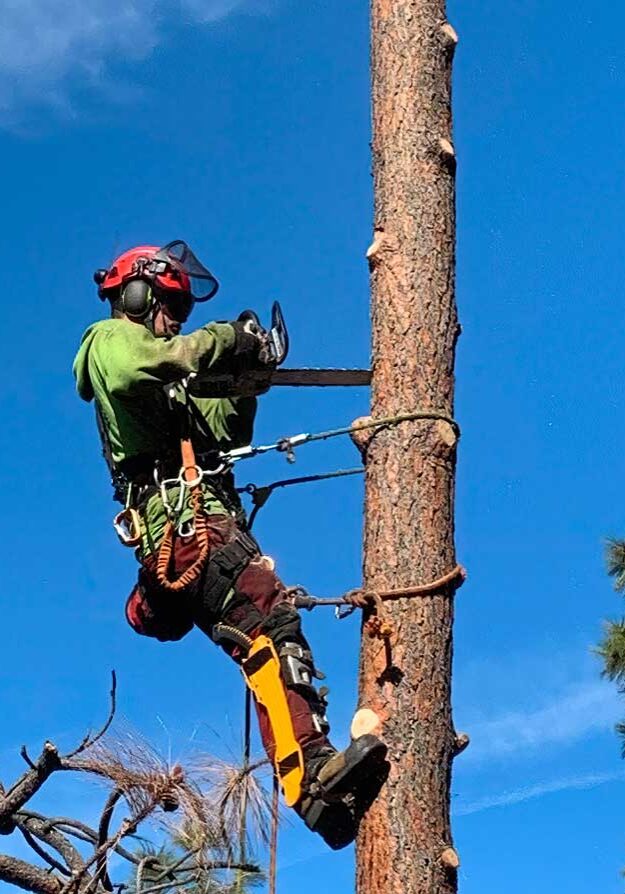
The difference between a true emergency and a stressed homeowner’s understandable anxiety is important. If a tree has failed, is actively splitting, is blocking emergency access, or threatens occupied structures, rapid response is warranted. If the concern is general overgrowth that has existed for years, the safer path is usually a scheduled assessment. During extreme fire weather, many contractors will avoid nonessential cutting because sparks, equipment heat, and unstable conditions raise operational risk.
Communities benefit when they plan before the emergency. They know which routes must remain open. They identify staging areas. They understand who has authority in common areas, homeowner associations, and shared easements. The best Emergency Tree Services are integrated into a broader preparedness system, not treated as a last-minute scramble.
A practical rhythm for annual mitigation work
Wildfire mitigation succeeds when it becomes part of the local calendar. That does not mean every property needs major work every year. It means every property needs review, housekeeping, and periodic corrective care before conditions peak.
A workable annual rhythm often looks like this:
- Inspect trees and surrounding fuel conditions in late winter or early spring
- Schedule priority pruning, removals, and stump work before the hottest months
- Clean debris regularly through the dry season, especially around structures and access routes
- Reassess after major wind, storm, or heat events
- Document completed work so future crews understand what was done and why
That kind of routine prevents the all-too-common pattern where residents ignore the landscape for three years, then demand immediate fire hardening in the worst possible month. Crews become harder to book, restrictions tighten, and rushed decisions lead to poor outcomes.
Community-scale work is different from parcel-by-parcel work
One well-maintained property in a neglected neighborhood is better than nothing, but wildfire does not respect fence lines. The most successful high-risk communities treat tree care as shared infrastructure. That can mean coordinated inspections, common standards for clearance near roads and hydrants, and phased fuel reduction in greenbelts, trail corridors, and association-owned parcels.
The challenge is balancing consistency with site-specific judgment. A broad rule such as “remove all trees within a set distance” sounds simple, but it often ignores species differences, slope, age class, and habitat concerns. A better approach is to establish performance goals. Improve crown spacing. Reduce deadwood loads. Protect access routes. Remove trees with unacceptable failure risk. Then let qualified professionals adapt those goals to each micro-site.
In one foothill community, residents focused heavily on backyards because that is where they spent time. The greater problem, however, sat along a narrow private road lined with declining roadside pines. Several had basal decay and overextended crowns leaning toward the only evacuation route. Once those were addressed through Dangerous Tree Assessment and Removal, the risk profile of the whole neighborhood changed more than it would have from ten ornamental backyard pruning jobs.
Choosing the right professional matters as much as the work itself
There is no shortage of companies that advertise fire clearance. The quality range is wide. Some crews understand tree biology and fire behavior. Others simply cut hard, haul debris, and move on. In high-risk zones, that difference shows up later in tree health, maintenance burden, and hazard potential.
A good provider will usually start with assessment before prescribing work. They should be able to explain why a tree stays, why another goes, and how Tree Pruning & Crown Shaping decisions support fuel reduction without compromising structure. If Tree Cable and Bracing is proposed, they should explain the inspection schedule and the reason retention is defensible. If removals are recommended, they should discuss debris handling, Stump Removal & Grinding options, and site restoration implications.
Certified Arborist Consultation is especially valuable when the property has mature trees, steep grades, prior fire injury, or conflicting priorities such as view preservation versus shade retention. Those are judgment calls. They should not be reduced to a one-price-fits-all estimate scribbled at the curb.
The landscape you keep after mitigation
People sometimes fear that wildfire mitigation will leave them with a bare, harsh property. Done poorly, it can. Done well, it creates a site that still feels shaded, established, and livable, but functions more safely under stress. Healthier crown spacing lets wind move through without carrying flame as readily. Better pruning reduces dead fuel and branch failure. Selective removals improve vigor in the remaining stand. Stumps and debris no longer trap dry material near structures. Access improves for residents, maintenance crews, and firefighters alike.
That is the real value of wildfire mitigation tree services. They do not promise immunity. No ethical professional should make that claim. What they do is lower the intensity and improve the odds. They buy time, reduce avoidable hazards, and give both homeowners and response crews a more defensible environment to work in.
For communities living with annual fire seasons, that is not a cosmetic upgrade. It is disciplined, ongoing risk management, carried out tree by tree, road by road, and season by season.
Name: Ace Tree Services Ltd.
Address: 4656 Wallace Hill Rd, Kelowna, BC V1W 4C2, Canada
Phone: 250-212-9593
Website: https://acetree.ca/
Email: [email protected]
Hours:
Sunday: Closed
Monday: 7:00 AM–5:00 PM
Tuesday: 7:00 AM–5:00 PM
Wednesday: 7:00 AM–5:00 PM
Thursday: 7:00 AM–5:00 PM
Friday: 7:00 AM–5:00 PM
Saturday: 7:00 AM–5:00 PM
Time zone: Pacific Time
Open-location code / Plus code: RHF8+8G Kelowna, British Columbia, Canada
Map/listing URL: https://www.google.com/maps/search/?api=1&query=Google&query_place_id=ChIJxRVIBx2LfVMRNRSkp6-IC0U
Embed iframe:
Socials:
https://www.facebook.com/p/Ace-Tree-Services-61585901931447/
Ace Tree Services Ltd. provides professional tree care from its Kelowna location on Wallace Hill Road.
The official website lists tree removal, stump removal and grinding, tree pruning and crown shaping, emergency tree services, certified arborist consultation, dangerous tree assessment and removal, tree cabling and bracing, and wildfire mitigation.
Ace Tree Services serves homeowners, businesses, and property owners in Kelowna and throughout the Okanagan Valley.
The company’s official site highlights ISA Certified Arborist support, local Okanagan experience, and fully insured tree service work.
Customers can contact Ace Tree Services for planned tree maintenance, high-risk removals, storm-related tree concerns, pruning, stump grinding, and arborist consultation needs.
The supplied public listing address is 4656 Wallace Hill Rd, Kelowna, BC V1W 4C2, near rural and residential service areas in southeast Kelowna.
For tree services in Kelowna and the Okanagan, call 250-212-9593, email [email protected], or visit https://acetree.ca/
The public map listing uses plus code RHF8+8G Kelowna, British Columbia, Canada and can help customers find Ace Tree Services Ltd. near Wallace Hill Road.
Popular Questions About Ace Tree Services Ltd.
What does Ace Tree Services Ltd. do?
Ace Tree Services Ltd. provides tree removal, stump removal and grinding, tree pruning and crown shaping, emergency tree service, certified arborist consultation, dangerous tree assessment and removal, tree cabling and bracing, and wildfire mitigation.
Where is Ace Tree Services Ltd. located?
Ace Tree Services Ltd. is listed at 4656 Wallace Hill Rd, Kelowna, BC V1W 4C2, Canada.
What phone number should customers call?
Customers can call Ace Tree Services Ltd. at 250-212-9593.
What is the email address for Ace Tree Services Ltd.?
The supplied email address is [email protected].
What are Ace Tree Services Ltd.’s hours?
The supplied listing hours show Monday through Saturday from 7:00 AM to 5:00 PM, with Sunday closed, Pacific Time. The official website lists 7:00 AM to 5:00 PM, Monday through Friday, so customers should confirm Saturday availability before booking.
Does Ace Tree Services Ltd. provide emergency tree service?
Yes. The official website lists emergency tree services, including emergency tree removal, dangerous tree assessment, emergency stabilization, and limb or branch cleanup.
Does Ace Tree Services Ltd. offer arborist consultations?
Yes. The official services page lists certified arborist consultation as one of the company’s Okanagan tree services.
Does Ace Tree Services Ltd. provide stump grinding?
Yes. The official services page lists stump removal and grinding as a service.
What areas does Ace Tree Services Ltd. serve?
The official website states that Ace Tree Services serves Kelowna and the Okanagan Valley.
How do I contact Ace Tree Services Ltd.?
Call 250-212-9593, email [email protected], visit https://acetree.ca/, or use the listed social profile: Facebook.
Landmarks Near Kelowna, BC
Wallace Hill Road: The road listed for Ace Tree Services Ltd. and a practical reference point for the company’s Kelowna location.
East Kelowna: A nearby rural and residential area where tree maintenance, pruning, removals, and wildfire mitigation can be important for property owners.
Myra-Bellevue Provincial Park: A major outdoor landmark southeast of Kelowna and a useful reference for the surrounding hillside and forested areas.
Gallagher’s Canyon: A nearby Kelowna community with residential properties, mature trees, and landscape maintenance needs.
Kettle Valley: A southeast Kelowna neighborhood with homes, parks, and landscaped properties.
Mission Creek Greenway: A well-known natural corridor in Kelowna and a local reference point for tree-lined recreation areas.
Orchard Park Shopping Centre: A major Kelowna retail landmark and citywide reference point.
Downtown Kelowna: A central business and residential district within Ace Tree Services’ broader Kelowna service area.
Okanagan Lake: A major regional landmark running through Kelowna and the surrounding Okanagan Valley.
Mission Creek Regional Park: A recognizable Kelowna park and natural landmark with extensive trees and trails.
Rutland: A large Kelowna community with residential and commercial properties that may need tree service support.
Glenmore: A Kelowna neighborhood with homes, parks, and established trees.
Lower Mission: A residential and lake-adjacent Kelowna area where pruning, tree health, and property safety can matter for homeowners.
Kelowna International Airport: A major transportation landmark north of central Kelowna.
West Kelowna: A nearby Okanagan community across the lake and a practical regional service reference.
For tree removal, stump grinding, pruning, crown shaping, emergency tree service, arborist consultation, dangerous tree assessment, cabling and bracing, or wildfire mitigation near these Kelowna and Okanagan landmarks, contact Ace Tree Services Ltd. at 250-212-9593, email [email protected], or visit https://acetree.ca/